
Kanishk Ranka
Relationship Manager
Need Help? Get In Touch
Email:
Relationship Manager
Need Help? Get In Touch
Email:
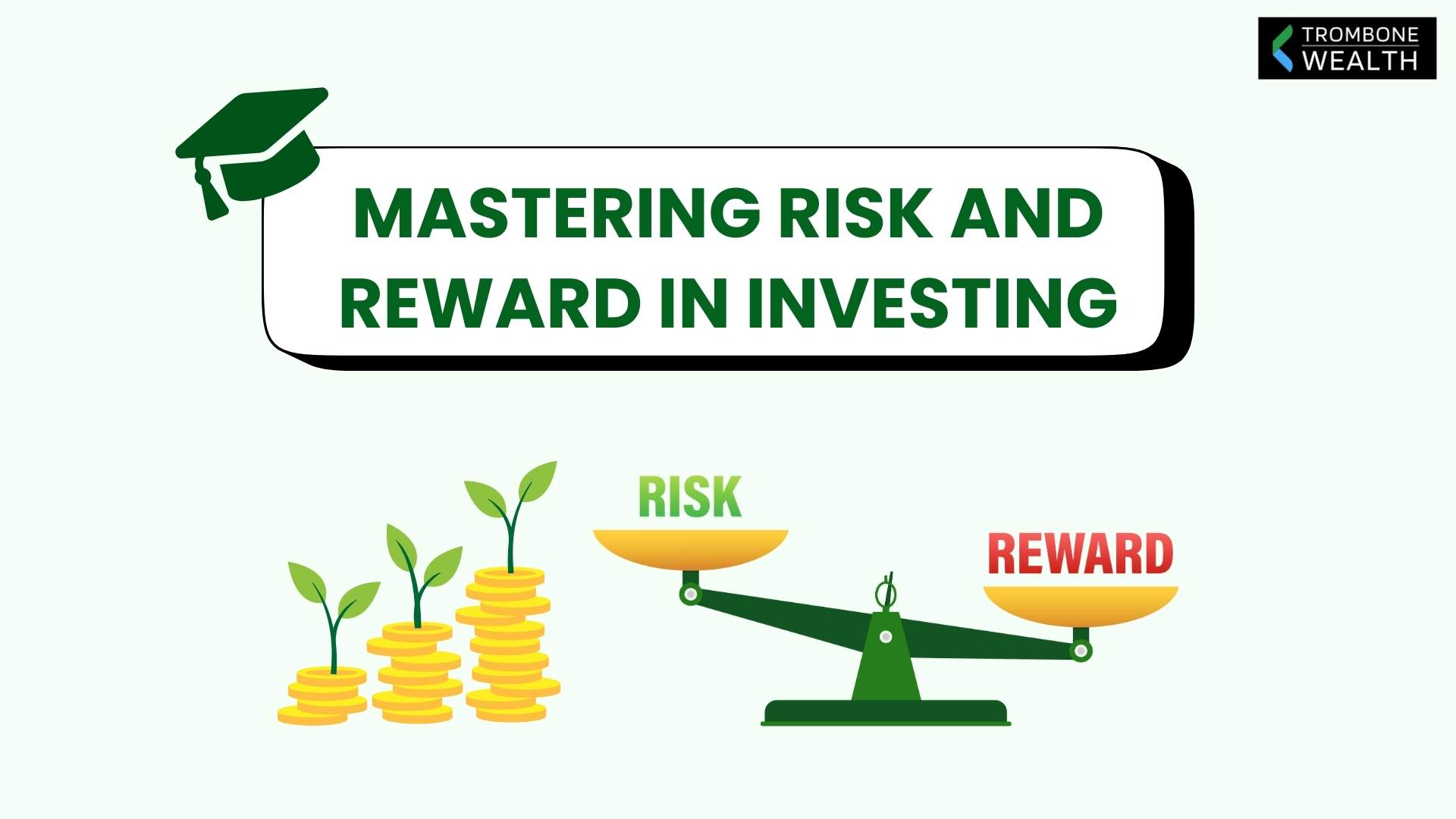
When it comes to investing, risk and reward play crucial roles in shaping your financial outcomes. Risk in the context of investment refers to the possibility that your investment, whether in real estate, stocks, or bonds, might not yield the expected returns or, in a worst-case scenario, could result in a loss of your invested capital.
For instance, small-cap stocks offer enticingly higher possible returns to investors, but the associated risk lies in the potential for the company to go bust, leading to a loss of the invested amount. Despite this, such investments can be rewarding due to their potential for substantial returns.
While embracing risk might not be easy or comfortable for everyone, it is an essential aspect of investing. The nature and extent of risk can vary based on the type of investment chosen. Debt mutual funds, for example, seek to minimize risk in favor of more consistent returns, while other investments, like direct stock ownership, strike a different balance between risk and potential rewards.
Alternative investment avenues such as hedge funds and private equity firms often demand a higher initial investment, which in turn increases the risk, but this risk is counterbalanced by the potential for significant returns.
Determining your risk tolerance is pivotal. Opting for low-risk strategies, such as investing in high-yield savings accounts or Fixed deposits (FDs), can provide steady albeit modest returns. However, if your primary objective is to grow your assets, these strategies may fall short. On the flip side, riskier investments carry the potential for both substantial losses and remarkable gains. Thus, a balanced approach is to diversify your investment portfolio.
Certain high-reward investments may possess lower inherent risk compared to others, and vice versa. For instance, within the realm of alternative investments, trading and venture capital are associated with higher risk, while other alternative fixed-income investments may offer relatively lower risk with potentially lucrative returns.
Achieving a balance between risk and reward in your investment portfolio necessitates a comprehensive understanding of your willingness to assume risk and whether the potential rewards justify it. Diversification, as opposed to concentrating your investments in a single high-risk venture, enhances your position. While a single moonshot investment might lead to substantial gains, its failure could be catastrophic. Conversely, diversification mitigates the impact of any single investment's downturn.
Diversification is the key to harmonizing risk and reward in your investment strategy. Consider the example of an investment portfolio solely composed of airline stocks. Should a specific industry event adversely affect these stocks, your entire investment could be at risk. In contrast, if you had diversified across sectors, losses would be confined to the affected industry while other sectors could balance out the impact.
Diversification offers several advantages. Firstly, it diminishes the overall risk exposure, as losses in one area may be offset by gains in others. Secondly, it opens the door to higher potential returns by tapping into the growth of different markets. Thirdly, diversification can contribute to stability by reducing the overall volatility of your portfolio.
However, it's important to note that diversification does not guarantee success, as no investment approach is foolproof. Nonetheless, it is an effective strategy for mitigating the associated risks. Ultimately, diversifying your investments, rather than concentrating them, is a prudent way to navigate the investment landscape.
Striking a balance between risk and reward is a sound investment strategy. Nevertheless, even with this balance, it's essential to recognize that investing always carries inherent risks.
Disclaimer: Investments are subject to market risk, Please read all documents carefully and anything mentioned above is not advised and consult a financial advisor before taking any decisions.
 Chat now
 Schedule a call